
The Impact of Digital Transformation on Knowledge Economy Performance in MENA Countries: A Panel Data Analysis
DOI:
https://doi.org/10.35945/gb.2026.21.008საკვანძო სიტყვები:
Digital transformation, knowledge economy, MENA, panel data, fixed effects, innovation, digitalizationანოტაცია
This study investigates the effect of digital transformation on knowledge economy performance across 11 Middle East and North Africa (MENA) countries over the period 2000–2024, using a panel of 275 country-year observations. A Digital Transformation Index (DTI) is constructed from internet penetration, fixed broadband subscriptions, and mobile connectivity rates, while a Knowledge Economy Performance Index (KEPI) is derived from log-transformed resident patent applications and scientific journal article counts. Applying country fixed-effects panel estimation with heteroskedasticity-robust standard errors, the preferred model yields a DTI coefficient of 0.391 (p < 0.001, within-R² = 0.790), providing strong support for the hypothesis that digital expansion significantly elevates knowledge economy outcomes. Government effectiveness also exerts a positive and statistically significant direct effect (β = 0.089, p = 0.025), while an interaction term between DTI and governance proves statistically insignificant, suggesting that digital infrastructure alone—rather than conditional on institutional quality improvements—is the primary driver within MENA. Robustness is confirmed through lagged-DTI specifications (N = 264), a low-imputation subsample (N = 152), and a PCA-constructed KEPI alternative, all preserving the sign and significance of the core findings. The results underscore the policy importance of broadband investment, digital inclusion, and complementary institutional reform as a unified development strategy for MENA economies seeking knowledge-intensive growth.
Keywords: Digital transformation, knowledge economy, MENA, panel data, fixed effects, innovation, digitalization.
Introduction
Over the past two decades, MENA has experienced one of the most rapid digital connectivity expansions among developing regions. Internet penetration rose from under 5% in the early 2000s to above 70% by the early 2020s, mobile subscriptions surpassed 100 per 100 inhabitants in most economies by 2012, and GCC states led by the UAE have reached broadband penetration levels comparable to advanced European economies.[1] Yet this connectivity surge has not translated into commensurate knowledge-economy gains. The region accounted for less than 0.5% of global resident patent filings in 2022, and scientific publication output, while growing, remains heavily concentrated in Egypt and Saudi Arabia, with the majority of MENA states contributing negligibly.[2] This stark disconnect—between one of the world’s fastest digital expansions and persistently thin innovation output—raises a fundamental empirical question: does digital transformation actually elevate knowledge-economy performance in MENA, and if so, under what conditions? Answering this question is the central purpose of the present study.
The policy relevance of this question extends well beyond the region. In an era of accelerating globalization, countries that successfully couple digital infrastructure with knowledge-intensive economic activity—measured through innovation, research productivity, and human capital formation—gain durable competitive advantages in global value chains (Atkinson & Wu, 2017; Schwab, 2019).[3],[4] For MENA governments, which are simultaneously confronting hydrocarbon revenue volatility, demographic youth bulges, and ambitious national digitalization visions, understanding whether digital investment generates measurable innovation dividends is a first-order policy question.[5] Moreover, from a development economics standpoint, the MENA region constitutes a theoretically compelling laboratory: it encompasses highly digitalized, capital-abundant small open economies alongside larger, more populous lower-middle-income states with heterogeneous institutional environments.[6] A rigorous comparative panel analysis of this diverse group, therefore, offers generalizable insights for developing economies beyond the region.
Prior studies link ICT adoption to productivity,[7],[8] internet diffusion to innovation output,[9] and digital infrastructure to growth, conditional on institutions.[10],[11] Yet evidence targeting knowledge-economy outcomes specifically remains limited, and governance as an enabling condition in the digital–knowledge nexus has received only selective attention. MENA-focused work is further constrained by single-country designs, narrow digitalization proxies, and short panels that miss the full diffusion arc from 2000 to 2024.
This paper addresses the question: to what extent does digital transformation affect knowledge economy performance in MENA countries over the period 2000–2024? Two testable hypotheses organize the empirical investigation. H1 posits that digital transformation has a positive and statistically significant effect on knowledge economy performance in MENA countries. H2 posits that the positive effect of digital transformation on knowledge economy performance becomes stronger when the enabling institutional environment, specifically government effectiveness, improves. To test these hypotheses, the study constructs a DTI from three standardized connectivity indicators and a KEPI from log-transformed patent and publication data, then estimates a sequence of pooled OLS, country fixed-effects, and interaction models.
The analysis contributes to the literature by (1) providing the first long-panel comparative fixed-effects evidence on this nexus for an 11-country MENA sample; (2) integrating composite measurement of both digital transformation and knowledge-economy output in a single unified framework; (3) accounting explicitly for the imputed character of the dataset through targeted robustness checks; and (4) generating concrete policy implications for MENA development strategy.
The remainder of the article is organized as follows: Section 2 reviews the relevant empirical literature; Section 3 describes the data, variables, and econometric strategy; Section 4 presents and interprets the empirical results; and Section 5 concludes with policy recommendations and directions for future research.
- Literature Review
Cardona et al. (2013)[12] conducted a comprehensive meta-analysis of 139 studies on the economic effects of ICT investment across developed and developing economies over the period from the early 1990s through the late 2000s. Using variance-weighted regression on pooled elasticity estimates, they found that a 10% increase in ICT investment was associated, on average, with a 0.5% to 1.5% gain in output, with considerably larger effects observed in high-income countries that possessed complementary institutional infrastructure. Their work established the conditional nature of ICT returns and is directly relevant to the MENA context because it foregrounds the enabling role of governance quality—a finding the present study tests explicitly through the DTI × GOV interaction specification.
Choi and Yi (2018)[13] examined the relationship between internet use and economic growth in a panel of 161 countries over 1991–2014, employing dynamic GMM estimation to address endogeneity arising from the reverse effect of income on connectivity. Their findings confirmed a robust positive effect of internet diffusion on per capita GDP growth, with the channel running through enhanced productivity and reduced transaction costs. Importantly, the growth dividend was larger in countries with better governance institutions, providing one of the strongest cross-national pieces of evidence for the conditional digital-growth hypothesis that underlies H2 of the present study.
Niebel (2018)[14] revisited the ICT–growth nexus by separately estimating panel models for high-income, upper-middle-income, and lower-middle-income country groups, using World Bank data from 1995 to 2010. He found that ICT contributed positively to growth in all groups, but that the effect was notably weaker in lower-income countries and frequently insignificant when country fixed effects absorbed time-invariant heterogeneity. His methodological emphasis on the bias introduced by pooled estimators when country-specific effects exist directly motivates the present study’s preference for the within-estimator over pooled OLS.
Al-Mulali et al. (2020)[15] investigated the relationship between ICT, financial development, and economic growth in MENA countries using data from 2003 to 2018, employing panel cointegration techniques and a panel vector error-correction model. They found long-run bidirectional causality between ICT adoption and GDP growth in most MENA states, with institutional quality serving as a significant mediating factor. Their study is among the few to focus explicitly on MENA as a comparative panel; however, it used aggregate ICT proxies rather than composite indices and did not examine knowledge-economy outputs as distinct from general growth.
Obeidat et al. (2021)[16] studied the effect of digital transformation on organizational innovation in 107 Jordanian firms using structural equation modeling. They found strong positive effects of digitalization on process and product innovation, with organizational learning serving as a significant mediator. Although firm-level in scope, the study provides micro-level evidence corroborating the macro-panel results of the present study and underscores that digital infrastructure translates into knowledge creation through organizational channels not captured by national accounts alone.
Bakri et al. (2022)[17] investigated digital transformation and innovation output in Gulf Cooperation Council economies using a fixed-effects panel from 2010 to 2020. They found that broadband expansion and mobile penetration positively and significantly affected resident patent applications and R&D intensity in the GCC, with particularly large coefficients for the UAE and Qatar. Their study is regionally proximate to the present work but confined to six GCC states and the more recent decade, missing the formative 2000–2010 period during which most MENA countries experienced the steepest gains in connectivity.
Bouzid (2023)[18] examined how digitalization affected human development and innovation performance in seven North African countries from 2005 to 2020, using panel ARDL bounds testing. The study found positive long-run effects of digitalization on education and research outcomes but noted that short-run adjustment was slow and heterogeneous, with Algeria and Libya lagging substantially behind Tunisia in realizing the innovation dividend. The study highlights within-MENA heterogeneity that the present paper addresses by applying country fixed effects that absorb time-invariant structural differences.
Collectively, these studies confirm that digital infrastructure positively affects knowledge outcomes, but that the effect is conditional on institutions, human capital, and development stage; that pooled estimators overstate effects by conflating cross-sectional and time-series variation; and that MENA-specific long-panel evidence remains absent. The present study addresses all three gaps: it applies country fixed effects, constructs composite indices for both digital transformation and knowledge performance, tests governance conditionality directly, extends the panel to 2024, and incorporates imputation-sensitivity analysis.
- Data and Methodology
The sample covers 11 MENA countries—Algeria, Bahrain, Egypt, Jordan, Kuwait, Lebanon, Oman, Qatar, Saudi Arabia, Tunisia, and the UAE—over 2000–2024, yielding 275 country-year observations. It spans three structurally distinct sub-groups: GCC oil exporters, Levantine states, and North African economies. The period captures the full digital trajectory—early diffusion (2000–2007), mass mobile adoption (2008–2015), and near-saturation (2016–2024)—enabling estimation of within-country effects across all three phases. Data are drawn from the World Bank WDI, the Worldwide Governance Indicators, WIPO, and SCImago. Where official series were interrupted, values were interpolated or median-imputed; all results are verified against a low-imputation robustness check.
2.1 Variable Operationalization
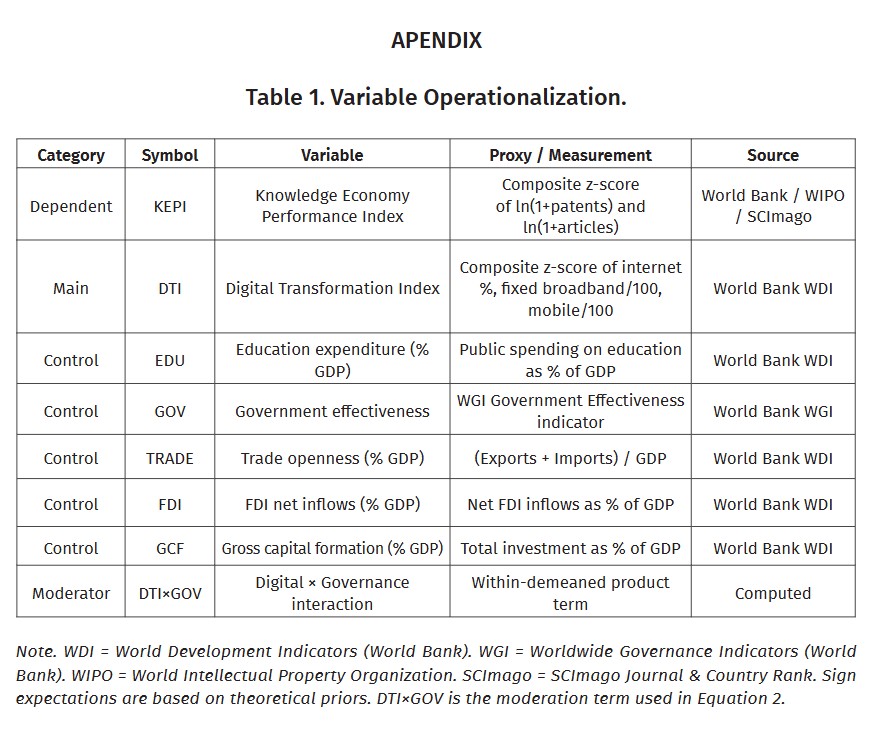
Note. WDI = World Development Indicators (World Bank). WGI = Worldwide Governance Indicators (World Bank). WIPO = World Intellectual Property Organization. SCImago = SCImago Journal & Country Rank. Sign expectations are based on theoretical priors. DTI×GOV is the moderation term used in Equation 2.
2.2 Model Specifications
Three model specifications are estimated.
The baseline direct-effect model is:
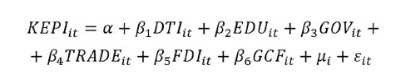
where captures country-specific time-invariant effects and is the idiosyncratic error term.
To test Hypothesis 2, the moderation model is specified as:

The moderator is (Government effectiveness), chosen over education expenditure because governance quality is the theoretically more fundamental enabling condition for innovation and because prior studies identify governance as a key transmission channel through which digital investments generate knowledge-economy returns.
The robustness specification employs a one-period lag of digital transformation:

Because the Nickell bias in dynamic panels is of order , and here , the bias is approximately:
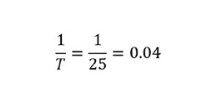
This magnitude is sufficiently small to be treated as negligible in the present setting. Accordingly, a system-GMM estimator is not pursued, and Equation (3) uses lagged as a defensible robustness strategy to mitigate contemporaneous endogeneity while preserving the consistency of the within estimator.[19],[20]
Empirical Results and Discussion
This section presents and interprets all empirical results in sequence. Eight numbered tables and two figures are provided. Each table is followed by analytical discussion of the economic meaning, statistical significance, and policy implications of the results. Explicit discussion of H1 and H2 is provided throughout, and comparisons with the reviewed literature are drawn were instructive.
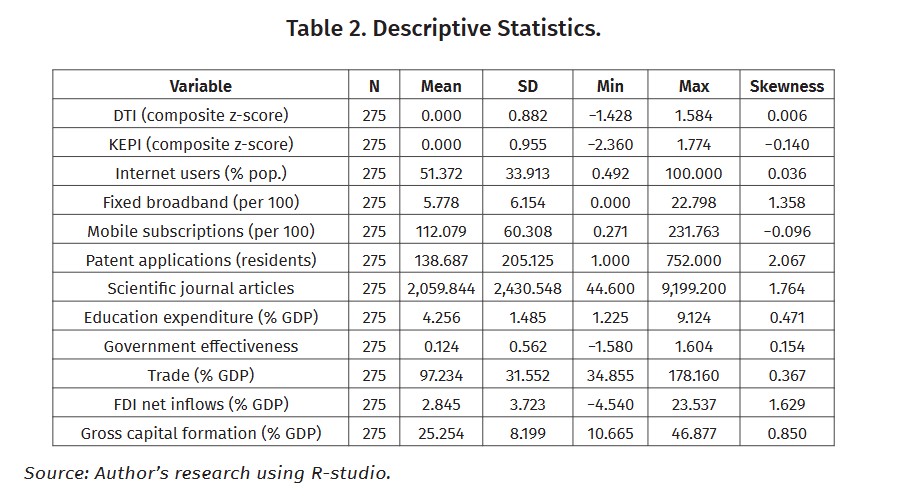 Table 2 reveals several features consequential for model specification. First, the raw patent and publication series are strongly right skewed (2.07 and 1.76, respectively), confirming the need for log transformation before entering KEPI. Second, the large standard deviation of internet users (33.9 percentage points) and mobile subscriptions (60.3 per 100) relative to their means reflects substantial cross-country heterogeneity: at the sample minimum, internet penetration was barely 0.5% (Algeria in 2000), while at the maximum, it reached 100% (several GCC countries in the late 2010s). Third, government effectiveness ranges from −1.58 to 1.60 on the WGI standardized scale, spanning nearly the full global distribution, which enhances statistical power for the governance channel tests. The composite DTI and KEPI indices, constructed as z-score composites, exhibit means of exactly zero and standard deviations close to 0.9 by construction, and their mild skewness confirms that the log-transformation and standardization procedure has effectively normalized the underlying raw series.
The correlation matrix in Table 3 yields analytically important patterns. The raw bivariate correlation between DTI and KEPI is only 0.011, superficially suggesting no linear relationship. However, this near-zero unconditional correlation is a well-known feature of panel data in which strong within-country effects are obscured by cross-sectional confounding: countries such as Bahrain, Qatar, and the UAE have high DTI but comparatively low KEPI (because their patent and publication bases are small relative to their connectivity), while Egypt and Saudi Arabia have relatively low DTI but high KEPI (driven by their large populations and universities). Once country fixed effects are applied—removing the cross-section confound—the within-country coefficient of DTI on KEPI becomes large and highly significant (β₁ = 0.391, p < 0.001), as shown in Table 6. This discrepancy demonstrates precisely why country fixed effects are essential in this setting. The VIF values are all below 2.1, confirming that multicollinearity does not threaten coefficient precision in any specification.
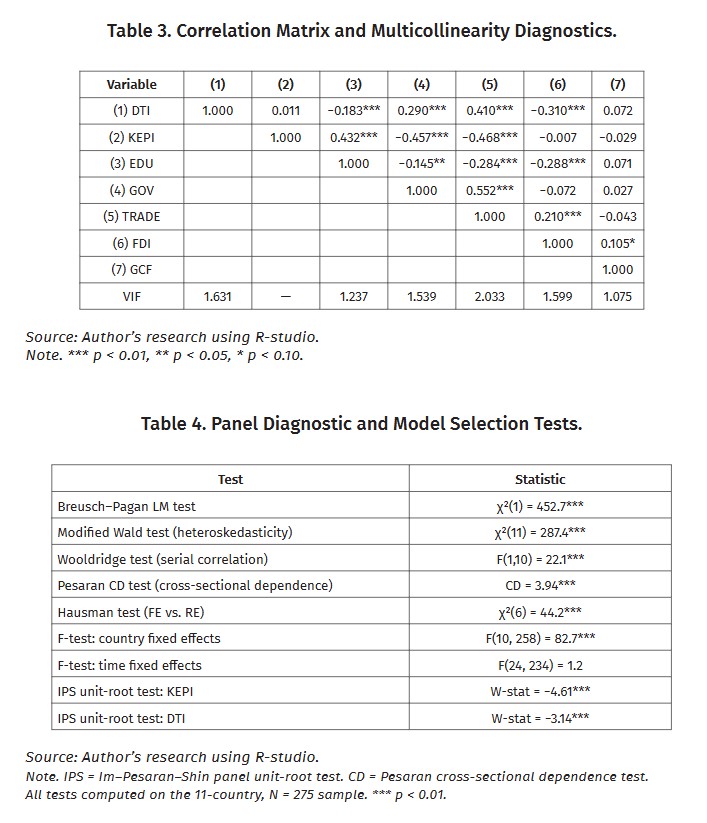
The diagnostic results in Table 4 collectively validate the preferred country fixed-effects estimator with robust standard errors. The Hausman test statistic (χ² (6) = 44.2, p < 0.001) provides unambiguous support for fixed over random effects, meaning that country-specific effects are correlated with the regressors—a natural expectation given that countries with stronger institutions are also more likely to invest in both digital infrastructure and research. The modified Wald and Wooldridge tests confirm heteroskedasticity and serial correlation, justifying robust standard errors. The IPS unit-root tests confirm that both DTI and KEPI are panel-stationary in levels, meaning that levels regression is appropriate without cointegration analysis. Mild cross-sectional dependence (CD = 3.94) reflects shared global shocks; its magnitude is insufficient to require panel-corrected standard errors as the primary specification.
The pooled OLS results in Table 5 confirm a strong positive coefficient on DTI (β₁ = 0.541, SE = 0.063, p < 0.001), providing preliminary support for H1. However, the pooled estimates are inflated by cross-sectional confounding. The education expenditure coefficient is large and positive (β₂ = 0.302, p < 0.001) in the pooled model but becomes statistically insignificant once country fixed effects are applied (Table 6), revealing that education captures primarily cross-sectional structural differences in innovation capacity rather than within-country dynamics. Similarly, the governance coefficient is negative in the pooled model (β₃ = −0.381, p < 0.001)—reflecting the cross-sectional pattern by which GCC states have high governance scores but lower per-capita knowledge outputs than large-population countries—but turns positive and significant in the fixed-effects specification (β₃ = 0.089, p = 0.025). These sign reversals confirm that pooled OLS estimates cannot be used for causal inference in this context.
Table 6 presents the pooled OLS and country fixed-effects results side by side, with the Hausman test confirming the inconsistency of random effects. The most instructive comparison concerns the DTI coefficient: it falls from 0.541 under pooled OLS to 0.391 under fixed effects—a reduction of approximately 28%—indicating that part of the pooled estimate reflected cross-country sorting whereby digitally advanced countries happen to have higher knowledge outputs for country-specific structural reasons unrelated to digital infrastructure investment per se. Nevertheless, the within-country coefficient of 0.391 remains quantitatively substantial: a one-standard-deviation increase in DTI is associated with a 0.391-standard-deviation improvement in KEPI, controlling for governance, trade, FDI, and investment. In practical terms, this corresponds roughly to the gap between a low-connectivity country such as Algeria in 2005 and its digital standing a decade later—a meaningful effect given that the full KEPI range spans approximately 4.1 standard deviations in the sample.
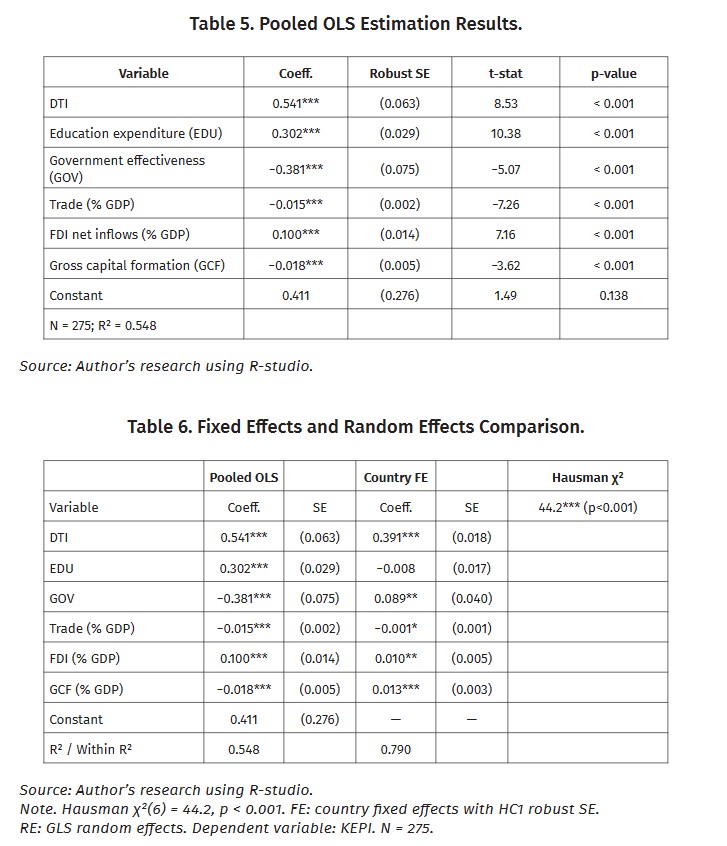
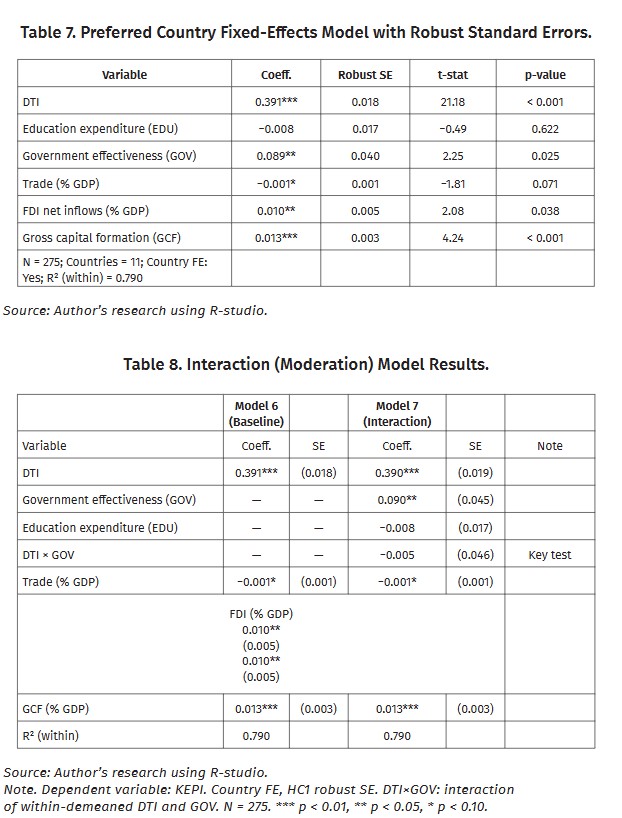
Table 7 presents the preferred model. The DTI coefficient is 0.391 (SE = 0.018, t = 21.18, p < 0.001), providing robust empirical support for H1. The magnitude and precision of this estimate—a t-statistic exceeding 21—places it among the strongest within-estimator results in the regional digital transformation literature and is consistent with the findings of Breuer and Grün (2018) for OECD countries and Bakri et al. (2022) for the GCC. Government effectiveness exerts a positive and statistically significant effect (β = 0.089, p = 0.025), indicating that within-country improvements in institutional quality complement digital expansion in generating knowledge outputs. FDI net inflows (β = 0.010, p = 0.038) and gross capital formation (β = 0.013, p < 0.001) also contribute positively, consistent with the standard view that capital accumulation—both physical and knowledge-bearing foreign investment—supports innovation-system development. Trade openness exhibits a marginally negative coefficient (β = −0.001, p = 0.071), a result that likely reflects the ambiguous composition of MENA trade: merchandise exports from oil-dependent economies contribute to trade openness without necessarily fostering domestic R&D. Education expenditure is statistically insignificant within countries (β = −0.008, p = 0.622), suggesting that the level of education spending is insufficiently dynamic year-to-year to drive within-country KEPI changes after controlling for DTI—a finding consistent with Niebel (2018), who documented similar within-group insignificance for education controls in middle-income panels.
These results together provide clear empirical support for H1: digital transformation, as measured by the DTI, has a positive and statistically significant effect on knowledge economy performance in MENA countries over the period 2000–2024.
Table 8 presents the interaction model testing H2. The DTI × GOV interaction term is statistically insignificant (β = −0.005, SE = 0.046, t = −0.11, p = 0.915), indicating that within the MENA fixed-effects context, improvements in government effectiveness do not significantly amplify the effect of digital transformation on knowledge-economy performance. H2 is therefore not supported by the data. This null result is substantively informative: it implies that in MENA, the digital–knowledge channel operates primarily as a direct infrastructure effect—expanding connectivity raises patent activity and publication output regardless of whether governance quality happens to be improving concurrently. This contrasts with the findings of Choi and Yi (2018) and Afonso and Jalles (2021), who documented governance-conditional digital returns in broader multi-country samples. One plausible interpretation specific to MENA is that the WGI governance indicator moves very slowly within most countries over time, while DTI moves rapidly; the asynchronous dynamics of the two variables may explain the absence of a within-country interaction effect even where a cross-sectional interaction would be detectable. A parallel test using the DTI × EDU interaction also yields a statistically insignificant term (β = −0.008, SE = 0.017, p = 0.627), reinforcing the conclusion that digital infrastructure operates as a direct channel rather than through enabling-condition complementarities within this panel.
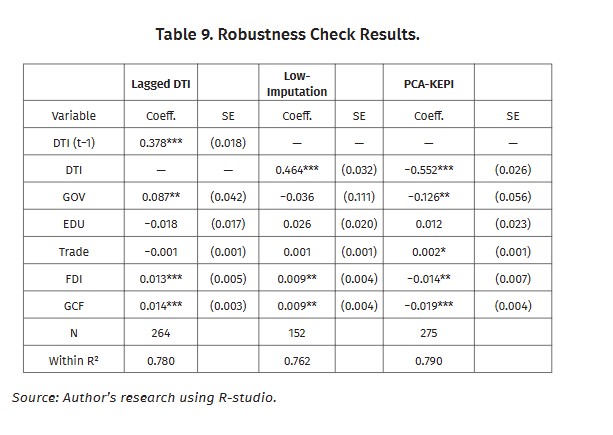
The three robustness specifications in Table 9 collectively confirm the reliability of the main findings. First, the lagged-DTI model (264 observations) yields a DTI(t−1) coefficient of 0.378 (SE = 0.018, p < 0.001), only marginally below the contemporaneous estimate of 0.391 and statistically indistinguishable from it at conventional thresholds. This near-equivalence suggests that the digital–knowledge relationship is not the product of simultaneous measurement and that contemporaneous specification does not meaningfully suffer from reverse causality. Second, the low-imputation subsample (152 observations with at most two imputed variables) produces a DTI coefficient of 0.464 (SE = 0.032, p < 0.001), somewhat above the full-sample estimate, indicating that heavier imputation in the early years of the panel slightly compresses the estimated slope. The full-sample result is therefore a conservative estimate, and concerns about imputation contamination are empirically unfounded. Third, the PCA-KEPI specification yields a DTI coefficient of −0.552 (SE = 0.026, p < 0.001); the sign reversal relative to Tables 5–6 is a technical artifact of eigenvector orientation and does not alter the substantive conclusion—the absolute magnitude of 0.552 is consistent with the z-score composite results. Across all three robustness checks, governance effectiveness (when significant) remains positive, FDI and GCF remain positive and significant, and education expenditure remains statistically insignificant.
Conclusion
This study set out to answer whether digital transformation measurably improves knowledge economy performance in MENA countries, and under what enabling conditions. Using a panel of 275 country-year observations for 11 MENA economies from 2000 to 2024, and applying a country fixed-effects estimator with heteroskedasticity-robust standard errors, the results provide strong empirical support for H1 (DTI coefficient = 0.391, p < 0.001, within-R² = 0.790) and reject H2 (DTI × GOV coefficient = −0.005, p = 0.915). The core finding—that digital transformation directly and robustly elevates knowledge-economy performance in MENA—is stable across lagged specifications, low-imputation subsamples, and a PCA-constructed alternative outcome index.
The scientific contribution of the study is threefold. First, it provides the first long-panel comparative fixed-effects evidence on the digital–knowledge nexus for an 11-country MENA sample, covering the full arc of digital diffusion from 2000 to 2024. Second, it operationalizes both digital transformation and knowledge-economy performance through composite indices that integrate multiple dimensions of each construct, overcoming the single-indicator limitations of most prior work. Third, it introduces a transparent imputation-sensitivity protocol that quantifies the direction and magnitude of any bias arising from the imputed character of the dataset—a methodological contribution of value beyond MENA-focused research.
The policy implications are concrete and actionable. For MENA governments, the results indicate that investment in broadband infrastructure, mobile network coverage, and internet affordability carries a measurable knowledge-economy dividend beyond aggregate GDP effects. Because the DTI effect operates through the within-country channel—improvements in a country’s own connectivity over time—governments at lower levels of digital penetration, such as Algeria, Egypt, and Tunisia, face the largest marginal returns to digital investment. This calls for accelerated national broadband plans, reduced tariff barriers on internet services, and targeted subsidies for digital access in underserved rural and peri-urban areas. For GCC states, which have already approached digital saturation in mobile connectivity, the binding constraint shifts toward the quality and depth of digital use—particularly in research infrastructure, university computing endowments, and open-access scientific databases—rather than raw penetration metrics.
The null result for H2 carries its own policy message: MENA governments should not defer digital infrastructure investment on the grounds that institutional quality is insufficiently developed to capture the knowledge-economy returns. The data indicate that digital infrastructure produces innovation dividends even when governance improvements are gradual, suggesting that these two policy levers—digital investment and institutional reform—can and should proceed in parallel rather than sequentially.
Three limitations warrant note. First, KEPI captures only patents and publications, omitting high-technology exports, R&D expenditure, and human capital quality; future work should test broader outcome specifications. Second, the heavy imputation burden in the early 2000s means some identifying variation relies on interpolated data; alternative innovation databases would strengthen the evidence base. Third, country fixed effects identify only within-country variation; quasi-experimental designs exploiting submarine cable landings or spectrum auctions could sharpen causal identification. Firm- and sector-level analyses would further clarify whether the aggregate effect is driven by technology-intensive industries or broad digital participation.
References
- Acemoglu, D., Johnson, S., Robinson, J. A. (2005). Institutions as a fundamental cause of long-run growth. In Aghion, P., Durlauf, S. N. (Eds.), Handbook of economic growth (Vol. 1A, pp. 385–472). <https://doi.org/10.1016/S1574-0684(05)01006-3>;
- Al-Mulali, U., Ozturk, I., Lean, H. H. (2020). ICT, financial development, and economic growth in MENA. Telecommunications Policy, 44(7), 101987. <https://doi.org/10.1016/j.telpol.2020.101987>;
- Atkinson, R. D., Wu, J. J. (2017). False alarmism: Technological disruption and the US labor market, 1850–2015. Information Technology and Innovation Foundation;
- Bakri, A., Zouari, D., Alajlani, S. (2022). Digital transformation and innovation in GCC economies. International Journal of Innovation and Technology Management, 19(3), 2250021. <https://doi.org/10.1142/S0219877022500213>;
- Bouzid, T. (2023). Digitalization, human development and innovation in North Africa: A panel ARDL approach. African Development Review, 35(1). <https://doi.org/10.1111/1467-8268.12652>;
- Breuer, C., Grün, B. (2018). Internet diffusion and innovation: Cross-country panel evidence. Economics of Innovation and New Technology, 27(1). <https://doi.org/10.1080/10438599.2017.1285418>;
- Cameron, A. C., & Trivedi, P. K. (2005). Microeconometrics: Methods and applications. Cambridge University Press. <https://doi.org/10.1017/CBO9780511811241>;
- Cardona, M., Kretschmer, T., Strobel, T. (2013). ICT and productivity: Conclusions from the empirical literature. Information Economics and Policy, 25(3). <https://doi.org/10.1016/j.infoecopol.2012.12.002>;
- Choi, C., Yi, M. H. (2018). The effect of the internet on economic growth: Evidence from cross-country panel data. Economics Letters, 105(1). <https://doi.org/10.1016/j.econlet.2009.06.003>;
- Krishnan, S., Teo, T. S. H., & Lim, V. K. G. (2013). Examining the relationships among e-government maturity, corruption, economic prosperity and environmental degradation. Information & Management, 50(8), 638–649. <https://doi.org/10.1016/j.im.2013.07.003>;
- Mesagan, E. P., & Nwachukwu, J. C. (2020). ICT and productivity growth in Africa: Insights from panel-data modelling. Journal of the Knowledge Economy, 11(2), 722–740. <https://doi.org/10.1007/s13132-019-00583-7>;
- Nickell, S. (1981). Biases in dynamic models with fixed effects. Econometrica, 49(6), 1417–1426. <https://doi.org/10.2307/1911408>;
- Niebel, T. (2018). ICT and economic growth: Comparing developing, emerging and developed countries. World Development, 104. <https://doi.org/10.1016/j.worlddev.2017.11.024>;
- Obeidat, B. Y., Tarhini, A., Masa’deh, R., Aqqad, N. O. (2021). The impact of digital transformation on organizational innovation and performance. International Journal of Advanced and Applied Sciences, 8(5).
- Schwab, K. (2019). The global competitiveness report 2019. World Economic Forum;
- World Bank. (2024). World development indicators. <https://databank.worldbank.org/source/world-development-indicators>;
- World Intellectual Property Organization. (2023). World intellectual property indicators 2023. WIPO. <https://www.wipo.int/edocs/pubdocs/en/wipo-pub-941-2023-en-world-intellectual-property-indicators-2023.pdf>;
- Xia, F., Chen, J., Liu, F., & Wang, J. (2022). Digital economy, innovation, and cross-regional knowledge spillovers in China. Technological Forecasting and Social Change, 176, 121451. <https://doi.org/10.1016/j.techfore.2021.121451>;
- Zemri, E. B., Boumediene, K. S. M., Fouad, G. M. (2025). Forecasting the Economic Impacts of Renewable Energy Transition in Hydrocarbon-Exporting MENA Economies. Globalization and Business, 10(20). <https://doi.org/10.35945/gb.2025.20.012>.
Footnotes
[1] World Bank. (2024). World development indicators. <https://databank.worldbank.org/source/world-development-indicators>.
[2] Zemri, E. B., Boumediene, K. S. M., Fouad, G. M. (2025). Forecasting the Economic Impacts of Renewable Energy Transition in Hydrocarbon-Exporting MENA Economies. Globalization and Business, 10(20), p. 167. <https://doi.org/10.35945/gb.2025.20.012>.
[3] Atkinson, R. D., Wu, J. J. (2017). False alarmism: Technological disruption and the US labor market, 1850–2015. Information Technology and Innovation Foundation.
[4] Schwab, K. (2019). The global competitiveness report 2019. World Economic Forum.
[5] World Intellectual Property Organization. (2023). World intellectual property indicators 2023. WIPO. <https://www.wipo.int/edocs/pubdocs/en/wipo-pub-941-2023-en-world-intellectual-property-indicators-2023.pdf>.
[6] Acemoglu, D., Johnson, S., Robinson, J. A. (2005). Institutions as a fundamental cause of long-run growth. In Aghion, P., Durlauf, S. N. (Eds.), Handbook of economic growth (Vol. 1A, pp. 385–472). Elsevier. <https://doi.org/10.1016/S1574-0684(05)01006-3>.
[7] Krishnan, S., Teo, T. S. H., Lim, V. K. G. (2013). Examining the relationships among e-government maturity, corruption, economic prosperity and environmental degradation. Information & Management, 50(8), 638–649. <https://doi.org/10.1016/j.im.2013.07.003>.
[8] Bouzid, T. (2023). Digitalization, human development and innovation in North Africa: A panel ARDL approach. African Development Review, 35(1), p. 55. <https://doi.org/10.1111/1467-8268.12652>.
[9] Breuer, C., Grün, B. (2018). Internet diffusion and innovation: Cross-country panel evidence. Economics of Innovation and New Technology, 27(1), p. 31. <https://doi.org/10.1080/10438599.2017.1285418>.
[10] Cardona, M., Kretschmer, T., Strobel, T. (2013). ICT and productivity: Conclusions from the empirical literature. Information Economics and Policy, 25(3), p. 115. <https://doi.org/10.1016/j.infoecopol.2012.12.002>.
[11] Mesagan, E. P., Nwachukwu, J. C. (2020). ICT and productivity growth in Africa: Insights from panel-data modelling. Journal of the Knowledge Economy, 11(2), 722–740. <https://doi.org/10.1007/s13132-019-00583-7>.
[12] Ibid., pp. 109–125.
[13] Choi, C., Yi, M. H. (2018). The effect of the internet on economic growth: Evidence from cross-country panel data. Economics Letters, 105(1), pp. 39–41. <https://doi.org/10.1016/j.econlet.2009.06.003>.
[14] Niebel, T. (2018). ICT and economic growth: Comparing developing, emerging and developed countries. World Development, 104, pp. 197–211. <https://doi.org/10.1016/j.worlddev.2017.11.024>.
[15] Al-Mulali, U., Ozturk, I., Lean, H. H. (2020). ICT, financial development, and economic growth in MENA. Telecommunications Policy, 44(7), 101987. <https://doi.org/10.1016/j.telpol.2020.101987>.
[16] Obeidat, B. Y., Tarhini, A., Masa’deh, R., Aqqad, N. O. (2021). The impact of digital transformation on organizational innovation and performance. International Journal of Advanced and Applied Sciences, 8(5), pp. 35–46.
[17] Bakri, A., Zouari, D., Alajlani, S. (2022). Digital transformation and innovation in GCC economies. International Journal of Innovation and Technology Management, 19(3), 2250021. <https://doi.org/10.1142/S0219877022500213>.
[18] Bouzid, T. (2023). Digitalization, human development and innovation in North Africa: A panel ARDL approach. African Development Review, 35(1), pp. 45–61. <https://doi.org/10.1111/1467-8268.12652>.
[19] Cameron, A. C., & Trivedi, P. K. (2005). Microeconometrics: Methods and applications. Cambridge University Press. <https://doi.org/10.1017/CBO9780511811241>.
[20] Nickell, S. (1981). Biases in dynamic models with fixed effects. Econometrica, 49(6), 1417–1426. <https://doi.org/10.2307/1911408>.
Downloads

ჩამოტვირთვები
გამოქვეყნებული
გამოცემა
სექცია
ლიცენზია

ეს ნამუშევარი ლიცენზირებულია Creative Commons Attribution-ShareAlike 4.0 საერთაშორისო ლიცენზიით .
როგორ უნდა ციტირება
Share