Inflation Dynamics in Algeria: Evidence from a Time–Frequency Wavelet Analysis of Monetary, Fiscal, and Investment Factors (1970–2024)
DOI:
https://doi.org/10.35945/gb.2026.21.006საკვანძო სიტყვები:
Inflation dynamics, money supply, government expenditure, capital formation, wavelet analysis, emerging market economy, Algeriaანოტაცია
This paper analyzes the dynamics of inflation in Algeria by examining its relationship with money supply, government expenditure, and capital formation over the period 1970–2024. The study adopts a time–frequency framework based on wavelet power spectrum and wavelet coherence analysis to capture the evolving and non-linear interactions between inflation and its key macroeconomic determinants across short-, medium-, and long-term horizons.
The empirical results provide strong evidence in support of the monetary hypothesis, revealing persistent and statistically significant coherence between money supply growth and inflation, particularly at short- and medium-term frequencies, with monetary expansion generally leading price increases. Government expenditure also exhibits a positive and significant association with inflation during specific periods, reflecting demand-driven inflationary pressures, especially in the context of fiscal expansions linked to oil revenue windfalls. In contrast, the relationship between inflation and capital formation appears asymmetric, as inflation tends to lead investment at medium-term horizons, suggesting that price volatility discourages capital accumulation rather than stimulating productive capacity.
Overall, the findings highlight inflation in Algeria as a time-varying and structurally driven phenomenon shaped by the interaction of monetary, fiscal, and investment dynamics. The wavelet-based approach offers policy-relevant insights by identifying the time horizons at which inflationary pressures are most pronounced.
Keywords: Inflation dynamics, money supply, government expenditure, capital formation, wavelet analysis, emerging market economy, Algeria.
Introduction
In Algeria, as a result of its impact on price stability, economic growth, and social welfare, inflation is still seen as the central concern in macroeconomic policy! Indeed, in spite of the country’s substantial oil wealth, inflation remains a central concern affecting every sector of society. Repeated bursts of inflation in recent decades, which can be attributed to money-borne inflation, intervention in fiscal policies, investment cycles, and structural changes, give the affected system a chaotic look. There are many papers on the empirical knowledge of inflation. However, we still have never reached a consensus about which factors are the main driver of inflation in Algeria, especially considering their changes over time and the different opinions held at varying frequencies. Most existing studies use traditional time-domain econometric techniques, which in practice suppose that relationships between inflation and its determinants remain stable over the entire sample period. But such an approach may still be missing important structural breaks, discontinuities in system operations, or dynamics at different time scales. Thus, the hard empirical evidence of monetary versus fiscal factors in producing inflation remains confused and inconclusive.
Under these circumstances, the central research problem of this paper is: How do money supply, government expenditure, and gross capital formation interact in Algerian inflation dynamics across different time horizons and over a span of years? This broad question then leads to three specific research questions: Do inflation and its major determinants in macroeconomics have highs in the short, medium, or long term? Do relationships between inflation and monetary, fiscal, or investment variables stay the same throughout time, or do they switch for different periods and frequencies? Which of these variables is causing the inflation, and when in time scales is this effect significant?
The paper combines the testing of these queries with a projected analysis. H1 (Monetary Hypothesis): Inflation shows significant and persistent time–frequency coherence with the money supply, and at medium- and long-term horizons, coherent movement in turn leads inflation upwards. H2(Fiscal Hypothesis): Government expenditures will generate positive impulses to inflation at a given time scale, indicating demand-pull inflation pressures during periods of expansionary fiscal policy. H3 (Investment Hypothesis): Capital formation differs over time in its relationship with inflation: medium-term extremes on the inflation side tend to precede high investment levels, reflecting the negative impact of unstable prices on capital accumulation.
By applying a time–frequency method based on wavelet analysis, this study breaks new ground in terms of these hypotheses. It allows us to observe the ever-changing nature of Algerian inflation and provides empirical evidence that cannot be obtained from conventional econometric methods.
- Literature Review
Inflation modeling is a multi-faceted subject, with numerous economic influences and a great variety of advanced econometric modeling methods applied to various national circumstances. Not only do they come from different theoretical perspectives, but they differ widely in empirical methodology.
Earlier studies largely attribute inflationary pressures to the growth of demand and the presence of macroeconomic imbalances. Hendry,[1] for instance, analyzes inflation in relation to demand pressures arising from goods and services markets, productive inputs, monetary expansion by authorities (governments or central banks), and asset prices such as equities. Similarly, the study of Stock et al.[2] emphasizes real economic slack as a key determinant of inflation dynamics. Building on this line of research, Marku[3] employs Bayesian nonparametric methods to identify persistent structural breaks in inflation data while accounting for its time-dependent behavior and stochastic volatility characteristics.
To date, a variety of econometric techniques have been used in the study of inflation. In addition, De Brouwer et al.[4] use error-correction models to provide both short-run dynamics and long-term equilibrium relationships. The time-series approach, ARMA, for example, with GARCH models as well, has been used by the study of Nyoni[5] in modeling volatility of inflation, while Chan[6] gives us stochastic volatility models to fit the varying time uncertainty in how inflation behaves. Despite these methodological improvements, the article of Rudd et al.[7] pinpoint a scenario in which many rational expectations-based inflation models fall off the cliff, not to describe actual inflation with any empirical integrity at all.
In more recent literature, some authors have, however, documented basic changes taking place in inflation dynamics. Mishkin[8] identifies three regularities that typify modern inflation: its reduced persistence, a flatter Phillips curve, and diminished sensitivity to external shocks. The study of Ball et al.[9] confirms these findings. They argue that inflation expectations have, since the 1980s, tended to become increasingly shock-anchored, i.e., gradually anchored to long-run inflation targets. However, Feldkircher et al.[10] find that inflation expectations tend to rise when inflation accelerates. This occurs although domestic demand and supply shocks often only exert short-lived effects. Parker[11] finds that the global inflation factor explains a substantial share of consumer price variation in high-income countries relative to others, with its impact differing across components of the consumption basket, being stronger for energy and food prices than for non-tradable goods.
A major strand of the literature uses wavelet analysis to capture the time-varying and frequency-dependent relation between money supply and inflation. Rua[12] and Ryczkowski[13] are the latest to show that the money–inflation relationship evolves at different time scales. Mandler et al.[14] find strong co-movements between money growth and inflation at low frequencies, while the study of Tursoy et al.[15] provides evidence of a bi-directional causality between money supply and inflation in Turkey at both short and long run. More recently, Chekouri et al.[16] find similar dynamics. Also, at different horizons, they provide evidence of significant causality from money growth to inflation. However, these studies tend to ignore fiscal variables, suggesting a need to integrate government consumption and investment into frequency-domain analysis of inflation.
The literature on Algerian inflation reveals a complex, multi-dimensional interaction between monetary, fiscal, and external variables. Early evidence by the study of Beltas et al.[17] shows a strong one-way causal relationship from money supply to inflation in Algeria for the period 1970-1988, supporting early monetarist views in a financially repressed economy.
The study of Ayad has made this analysis using cointegration detection methods, which allow for breaks in the constant over the period 1970-2018. Our findings confirm that there is now a long-run relationship among money supply, inflation, and real output, following multiple changes to the structure during this process. Although money supply and inflation do not have a direct influence on output growth, the results strongly support the monetary view of inflation’s evolution in Algeria.[18]
The article by Si Mohammed et al. employed an ARDL method to analyze the main determinants of inflation in Algeria from 1980 to 2012, and identified import prices, oil prices, money stock, government expenditure, and the nominal exchange rate.[19] Their findings are supported and extended by the study of Hamadouche, who found that a 1% increase in current government expenditure results in 2.14% higher inflation, while a 1% rise in capital expenditures lowers it by 1.08%. This highlights the asymmetrical effects of different components under fiscal policy.[20]
Recent studies point out that transmission channels are crucial. Taking an SVAR-X approach, Mehibel et al. considered the means by which oil price shocks pass on to inflation in Algeria. Their results suggest that in the short term, fiscal spending is the dominant channel, while in the long term, money supply becomes most influential, and this is followed by exchange rates. This development reflects Algeria’s oil-dependent fiscal structure.[21]
Synthesis The literature makes it clear that in Algeria, modelling price inflation is complex, structurally changes with time, and interacts in three ways between money supply, government spending levels, oil price fluctuations, import prices, and turning points in foreign exchange rates. A wide range of empirical findings and methodological diversity serves to emphasize the need for economists to take full account of the unique conditions in their own region that may differ significantly from prevailing conditions elsewhere when studying how inflation emerges in detail.
- Inflation in Algeria: Theoretical and Institutional Background
Inflation is one of the major macroeconomic phenomena because of its direct link to stability in both the economy and society, besides its immediate impacts on purchasing power, income distribution, and eventually economic policy itself. The issue of inflation in Algeria assumes special significance given the structural features of an economy still largely dependent on the hydrocarbon sector- an economy vulnerable to external shocks as well as fluctuations in public revenues. This paper attempts a theoretical analysis of inflation while bringing out its actual evolution within the Algerian economy based on such economic and statistical information that happens to be available.
Inflation is a sustained and general increase in the overall price level of goods and services over a certain period, resulting in a decline in the purchasing power of money, whereby a monetary unit cannot purchase the same quantity of goods and services as it could previously.[22] Therefore, inflation develops when most prices are rising rapidly; it is not simply an upsurge or upward movement in some prices. It is normally expressed through the consumer price index or CPI-the change in household consumption expenditure items on goods and services.
Economic theories have come to analyze inflation from different analytical angles. The Quantity Theory of Money articulates the relationship between money supply and general price level and states that an increase in the money supply, with constant velocity of money and real output assumed, will eventually lead to higher prices. Friedman[23] emphasized a monetary phenomenon of inflation, particularly a long-run monetary phenomenon.
On the other hand, the Keynesian approach highlights and explains the role played by aggregate demand in inflation. Therefore, according to this school of thought, expansionary fiscal policies increase government spending or consumption and investment; then we say that aggregate demand has exceeded aggregate supply when close to full employment within an economy, hence pressures on inflation.[24] Also found widely discussed within economic literature is a relationship between inflation and unemployment, where it’s theorized through the Phillips Curve as being inversely related, short run, long term; however breaks down.[25]
There are different types or forms of inflation depending on what causes it. Demand-pull inflation occurs when aggregate demand is more than productive capacity. Cost-push inflation happens because the costs of production (such as wages, price of raw materials, energy) are transmitted to consumers in higher prices, becoming upward rigid. Monetary inflation is very relevant in developing economies where an excessive expansion of the money supply exists without a corresponding increase in real output that brings about a general rise in the level of prices.[26]
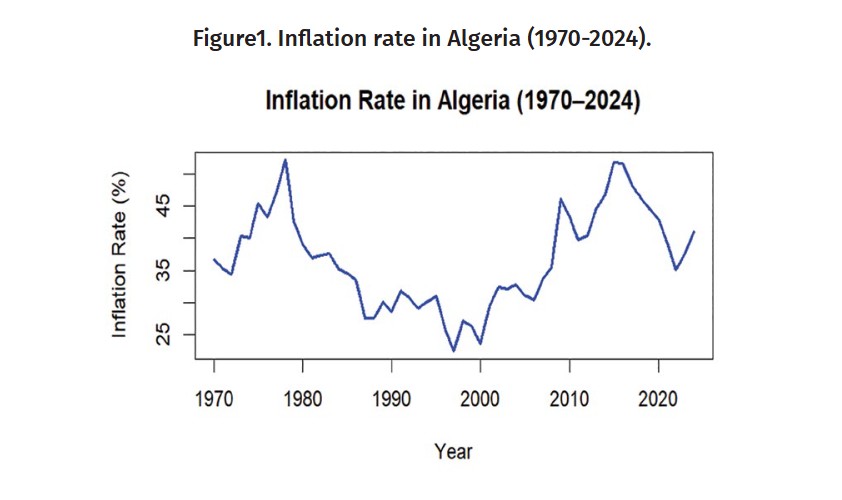
Historically, there were large differences in the rate of inflation at different times in the Algerian economy. In the early 1990s, high rates of structural inflation accompanied reforms toward a market-oriented economy. It is only later years to be found that since about a decade ago until now, cautious monetary policy accompanied by government intervention through price controls and subsidies on essential goods has left aggregate demand satisfied within existing supply, hence low and stable rates of inflation[27] (see Figure.1).
The most recent economic data in Algeria show inflation mainly driven by internal and external factors, among them changes in money supply, exchange rate fluctuations, volatility of food and energy prices, and the effects of expansionary fiscal policies. Oil prices play a central role in shaping inflation dynamics due to Algeria’s reliance on hydrocarbon revenues to finance public spending, which indirectly affects aggregate demand and price levels.[28]
Many empirical works undertaken on the Algerian economy confirm significant relationships between inflation and major macroeconomic variables- money supply, exchange rate, government spending, and GDP.
The economic and social impacts of inflation comprise, predominantly, the weakening of the real purchasing power of households, more particularly among the fixed-income group, thus negative effects on living standards and social inequality, apart from distorting saving and investment decisions due to greater economic uncertainty, which eventually hampers the process of economic growth in the medium term if not addressed through coherent, well-coordinated policy measures.
- Data and Methodology
- 3.1. Data
In this paper, results are presented from an experiment employing the wavelet coherence technique to examine how inflation and its determinants - i.e., money supply, government expenditure, and the volume of investment - evolve in Algeria through 1970-2024. This research method allows one not only to see the lengths and frequencies at which these variables most intensively affect inflation, but also whether, in any or all periods, all three lead or trail inflation in the time dimension.
Inflation is measured by the annual growth rate of the Consumer Price Index (CPI), while money supply is proxied by the broad monetary aggregate (M2). Government expenditure is represented by total public spending, while capital formation refers to gross fixed capital formation.
The data are extracted from official and trustworthy sources, the annual reports of the Bank of Algeria and the International Monetary Fund (IMF) data base World Bank database, to ensure consistency and accuracy. All variables are converted into constant 1990 United States dollars (adjusted for inflation) and expressed in natural logarithms, except for the inflation rate, so as to increase the homogeneity of the series and level up their statistical properties.
- Methodology
There are multiple reasons why wavelet analysis is an appropriate choice for this study. The Algerian economy is subject to repeated structural shocks (oil price fluctuations, economic reforms, monetary and fiscal policies changes), which result in a long-term instability of the economic relationship. Second, wavelet analysis provides a means to assess non-stationary time series without strong assumptions of stationarity. Third, this method allows us to learn more about how the relationships are functioning at different time scales, further helping policymakers craft better policies depending on the temporal scale of interest.
Wavelet-based methods are particularly suitable for emerging market economies characterized by structural breaks and time-varying dynamics. Thus, examining inflation in Algeria between the period 1970–2024 can be more accurately and closely analysed through the use of wavelet analysis. As we will see, wavelet analysis provides a comprehensive and dynamic understanding of inflation in Algeria.
- Continuous Wavelet Transform (CWT):
The wavelet technique is a relatively recent and highly efficient tool for addressing non-linearity and non-stationarity in economic and financial data. Although it is based on Fourier analysis, it overcomes its limitations by extracting information simultaneously from both the time and frequency domains.
The Continuous Wavelet Transform (CWT) is one of the most widely used wavelet analysis methods and is recognized as a powerful mathematical tool for analyzing the time–frequency characteristics of non-stationary time series. For a time series X(t), the Continuous Wavelet Transform (CWT) for a wavelet ψ(t) is defined as follows:
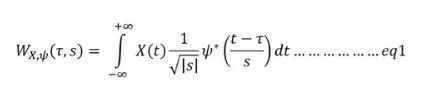
Where indicates the time and the frequency domain of the wavelet, respectively.
is the Morlet wavelet function, consisting of a plane wave modulated by a Gaussian:

The Wavelet Power Spectrum (WPS) of the continuous wavelet transform is defined as:

The WPS depicts and measures the local variance of a time series at different times and scales.[29]
- Wavelet squared coherence (WSC)
The wavelet squared coherence technique is a valuable tool for analyzing the co-movements between two time series across different time scales and frequency bands.
The wavelet coherence between two time series u and v is defined as:
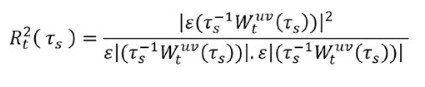
Where is the squared wavelet coherence, its value ranges between 0 and 1, and measures the local linear correlation between two time series at a particular scale. Where:
S: is a smoothing operator defined as:

Where represents smoothing along the wavelet scale axis, and smoothing in time.
: the cross wavelet power, it is viewed as the local covariance of u and v, where
are continuous wavelet transforms of two time series u(t) and v(t), respectively.[30]
The wavelet coherence phase difference is given by:

Where: and are the imaginary and real parts, respectively, of the smoothed cross wavelet power spectrum. Phase differences are indicated by arrows on the wavelet coherence plots. Right-pointing arrows indicate that the time series are in phase, while left-pointing arrows indicate they are in anti-phase. When the arrows point vertically upward, the first time series leads the second. Conversely, downward-pointing arrows indicate that the second time series is leading.[31]
In addition, the phase difference derived from the wavelet coherence analysis provides information on the direction of the relationship and potential lead–lag structures. Phase arrows pointing to the right indicate positive correlations, while arrows pointing to the left indicate negative correlations. Arrows pointing upward (downward) suggest that the second (first) variable leads the first (second) variable.
- Empirical Results
- Wavelet power spectrum results
This is accomplished using the wavelet power spectrum to analyze dynamic features of some important economic variables in Algeria for the period (1970–2024) in a joint time–frequency domain. Such a technique enables to detect the process dominant cycles and to quantify fluctuations intensity of inflation, money supply, government expenditure, and capital formation, while including the shocks of the economy and the changes of monetary and fiscal stimuli. Thus, as the wavelet power spectrum provides more informative dynamic intuition of the drivers of inflation at short-, medium- and long-run horizons, it renders the analysis more valid and robust in the context of the Algerian economy.
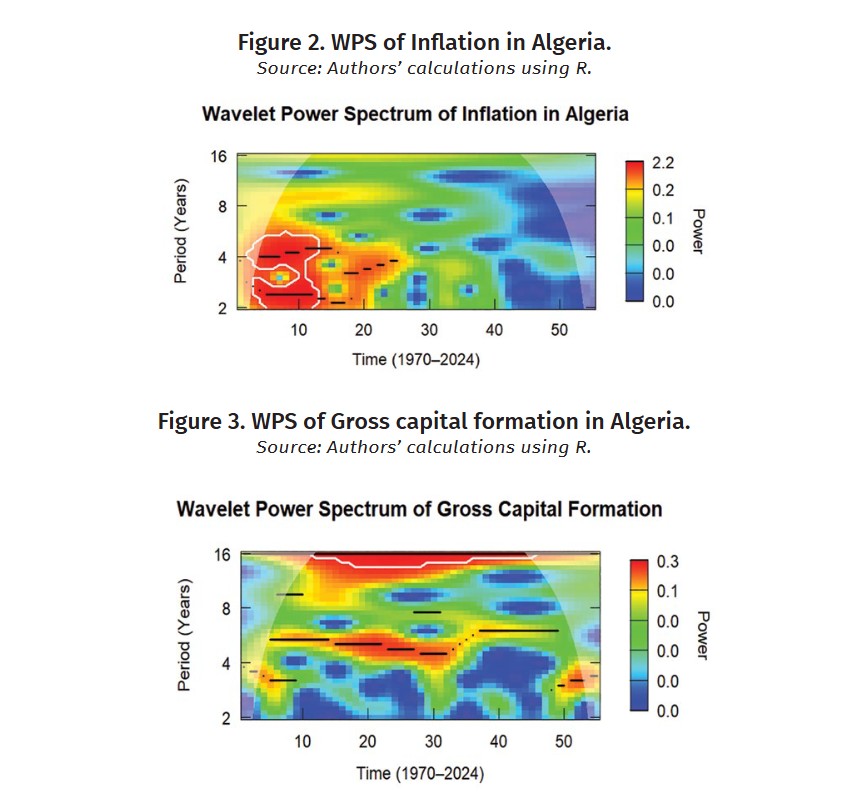
Figure 2 illustrates the inflation wavelet power spectrum in Algeria over the period 1970–2024. These show that inflation fluctuations are spelt printed out in the worldwide price index mainly at short and medium horizons with reference to years from 1970 to 1980, approximately 2–5 years. The statistically significant high-power regions imply that inflation dynamics in Algeria are governed primarily by cyclical shocks and policy-making rather than slowly evolving long-term trends. However, the weak power at longer periods means there is restricted (long-term) inflation persistence: temporary but lasting pressures account for virtually all of an episode of high price levels.
Figure 3 shows the wavelet power spectrum of gross capital formation in Algeria from 1970 to 2024. Power concentrations are strongly evident at medium and long horizons (approximately 4-16 years), reflecting the great long building cycles in which this capital is formed. These are largely driven by public investment programs and broad-gauge structural projects. The statistically significant areas of high power suggest that investment dynamics in Algeria are cyclical and irregular, and influenced predominantly by general macroeconomic fluctuations as well as changes in world oil prices. This may limit their ability--in the long run--to ensure economic stability.
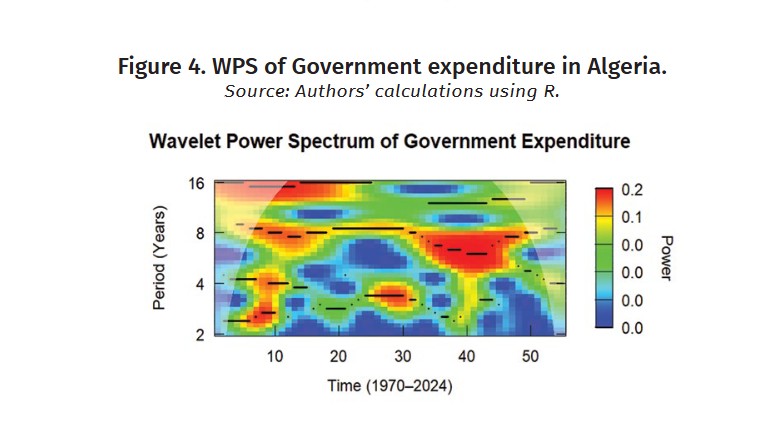
Figure 4 shows the wavelet power spectrum for government spending in Algeria in the 1970-2024 period. The pattern indicates significant power concentrations at medium-and long-term targets (about 4-16 years), reflecting fiscal policy cycles in Algeria. Significantly high-power areas show that government spending follows regular economic cycles. These largely result from varying inflows of oil revenue and the adoption of expansionary fiscal policies. Inflationary pressures are heightened by these variations in public spending, especially when real growth of output does not keep up pace with increases in public spending.
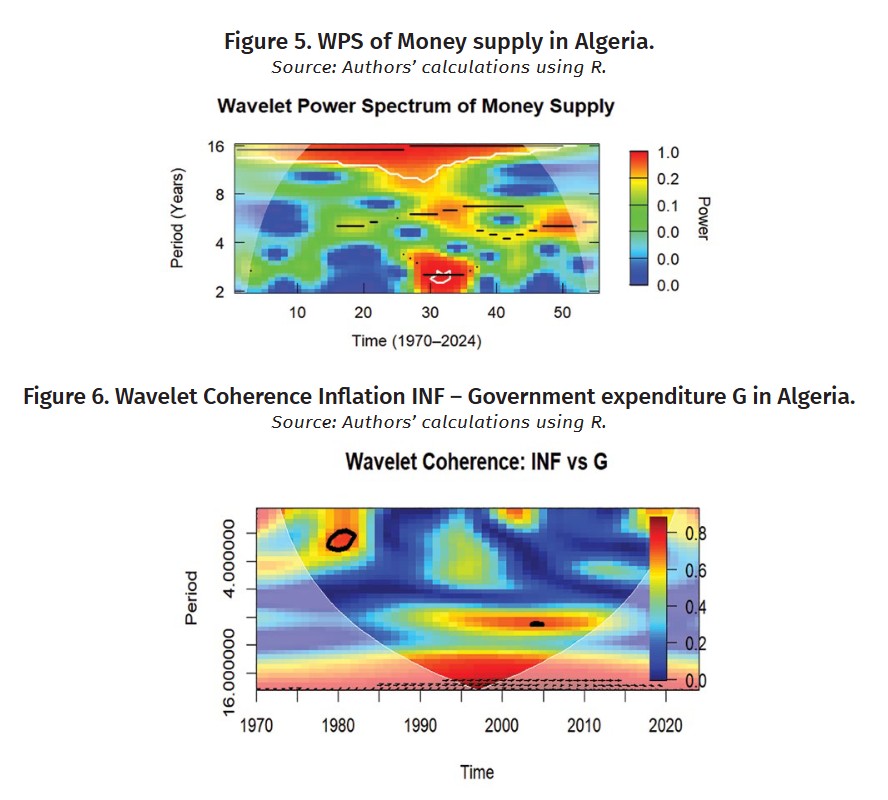
The wavelet power spectrum of money supply in Algeria reveals strong and time-varying fluctuations, particularly over the short- and medium-term horizons. Statistically significant periods indicate the presence of monetary cycles ranging between two and eight years, reflecting the sensitivity of money supply to economic shocks and changes in monetary policy. In contrast, long-term fluctuations appear less pronounced, suggesting a relatively stable long-run trend in money supply (See Figure 5).
- Wavelet coherence results
Wavelet coherence is employed here to analyze the dynamic interaction between inflation and its fundables (money supply, government expenditure, and capital formation) in Algeria for the period 1970–2024. This allows us to pinpoint the time periods and frequency bands where these variables are most closely linked to inflation, and whether monetary, fiscal, or investment variables lead or lag inflation at different horizons.
Figure 6 depicts wavelet coherence between government spending and inflation, based on a 1970-2024 interval in Algeria. Using the criterion suggested by Song et al., the actual results show both important coherence in terms (which is relevant in the shorter run) and statistically significant coherence at medium horizons of 2-5 years (about four-fifths). This very strong coherence between government expenditure and inflation means that there is an active, well-established relationship at work over time. It suggests that, when public spending increases are larger than required for public production to function smoothly and efficiently, wages will start to rise. This, in turn, pushes up prices on an economy-wide scale - potentially increasing short-term demand for goods because of producer price pressures. These findings are a testament to the inflationary character of fiscal policy in Algeria, where increases in government spending are often made without any corresponding increase in the means of production. With demand-oriented inflation.
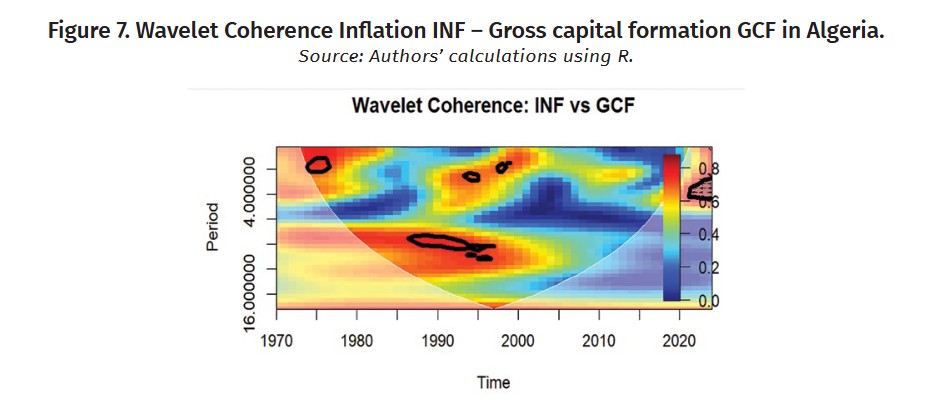
Figure 7 shows the wavelet coherence between inflation and gross capital formation in Algeria over the period 1970–2024. When you look at the diagram below, coherence for inflation with net capital formation is statistically significant both on a short and medium term (say about 2–5 years). This coherence indicates a close relationship between investment dynamics and inflation, whereby increases in investment—especially public investment—generate short-term inflationary pressures before their potential positive effects on productive capacity materialize. Efficiency in the transmission of investment into so many effective products is still so low that in the short run, it becomes inflation rather than being consumed by society. This pattern reflects inefficiencies in the transmission of investment into effective productive growth in the short run, thereby contributing to inflation rather than mitigating it.
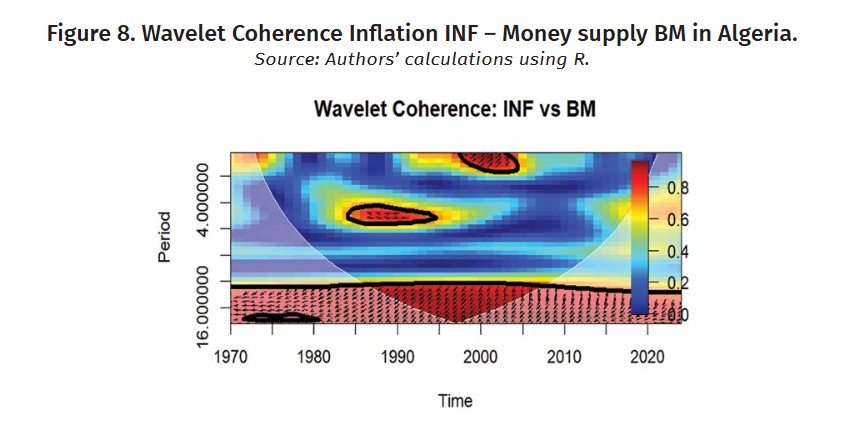
In Figure 8, we have the wavelet coherence of Inflation and Money Supply. The period is 1970 to 2024. These results show considerable and statistically significant coherence at short and medium-term horizons (roughly 2 - 5 years), particularly during the early part of the sample. Such high coherence shows how money supply expansion is generally the main factor in the movement of inflation. The further supply is increased, so will inflation rise along in both the short and medium term. These findings suggest that limitations on printing banknotes have failed to soften economic blows. Moreover, reliance upon monetary financing has grown heavy and so reinforces the monetary nature of inflation.
- Discussion of Results
The wavelet power spectrum and coherence findings present inflation in Algeria from 1970 to 2024 as an ever-changing dynamic phenomenon, influenced by various economic channels. The nature of these effects changes from short- to long- term, and thus cannot simply be pinned down as a question of money supply growth. First, wavelet coherence between inflation and money supply strongly confirms that the nature of inflation in Algeria is monetary, especially in the short and medium term. Coherence occurring within the 2–5 year period shows that prices are highly sensitive to cash injections resulting from deficit financing of government deficits, and lack an independent monetary authority. Injecting more money into a system where there is already excessive liquidity unrelated to real production only causes higher inflation rates, not basic production, in support of Friedman’s monetary inflation hypothesis.
Second, coherence between inflation and government expenditure reveals that expansionist fiscal policies also have a role in driving up consumer prices. In an economy whose revenue depends heavily on oil rents, higher public spending acts to increase total demand and output at a time when such advances are not followed by any corresponding increases in actual goods production. Consequently, fiscal influences push through into inflation pressures - especially if such public spending is borne by printing money or the country is relatively weak in terms of the productive sector.
Third, the relationship between inflation and gross capital formation exposes investment anomalies. While in the long run investment is believed to alleviate inflationary pressures by expanding capacity, in the short term, its results show it is a cause of inflation. This may be due to state investment inefficiencies, lengthy implementation delays, and highly import-oriented project investment, whose completion not only raises demand but also fails to raise actual domestic productive capacity.
These findings indicate that inflation in Algeria takes on many different forms: it is a product of monetary policy interacting with fiscal policy and structural investment dynamics. These results have significant policy implications for inflation targeting in the context of Algeria. At first, the tight time–frequency connection between the money supply and inflation highlights that there should be a more rigorous discipline in monetary policy, in addition to the higher independence degree of the central bank to minimize excess liquidity. The large inflationary effects of government expenditure underscore the need for fiscal sustainability, especially in an oil-exporting economy where revenue bonanzas tend to materialize in the form of pro-cyclical spending. Taking into consideration the above, the countercyclical response of capital formation to inflation suggests the need for structural reforms that could enhance investment efficiency, lower implementation lags, and reduce the import dependence of investment projects. Thus, an integrated policy framework for monetary discipline, sustainable fiscal policy, and structural reforms is needed to enable the emergence of stable price conditions and sustainable growth in Algeria.
With the evolution of the global economy, inflation dynamics are more contingent on external shocks, especially in open and resource-dependent economies. Important external determinants include exchange rate movements and imported inflation; volatility of international prices of commodities and energy; and international financial shocks generated by world crises and the broad liquidity conditions tightening or easing globally. Moreover, the behavior of monetary and fiscal authorities is influenced by policy frameworks that are being promoted by international institutions, as well as by constraints from external financing and from exposure to developments in the foreign sector, which, in turn, determine domestic inflation outcomes.
Against this backdrop, Algeria represents an especially salient empirical case. Given its reliance on oil-exporting income, its high dependence on hydrocarbon revenues as well as its heavy reliance on imports, inflationary pressures in Algeria are crucially linked to real shocks transmitted through oil price cycles, exchange rate fluctuations, and, on the fiscal side, reactions to global conditions. Algeria stands as a microcosm of the inflation dynamics of oil-reliant economies, shaped by the interplay of such external factors with domestic monetary and fiscal dynamics.
The study adds to the worldwide body of knowledge by envisaging the inflation in such nations mainly as not solely a domestic event, but as a time-varying process established by the interplay between exterior shocks and interior response performance. As the analysis implements a time-frequency wavelet approach, it offers an international perspective of how inflationary pressures adjust across time horizons amongst oil-exporting economies subject to global business cycles.
Conclusion
Wavelet power spectrum and wavelet coherence methods are used to examine the dynamic connections between inflation and its main macroeconomic determinants in Algeria through the period 1970-2024. By employing a time-frequency framework, this analysis affords a comprehensive view of how changes in monetary and fiscal policy, as well as investment-related factors, interact with inflation over different growth horizons. For this reason, the authors’ hypotheses can be reliably assessed.
Empirical evidence strongly supports the monetary hypothesis. Over short- and intermediate frequencies, the money supply has significant and persistent coherence with inflation. The results suggest that monetary expansion frequently leads to inflation, confirming the idea that excess liquidity has a major impact on inflation dynamics in Algeria. This finding provides solid evidence for the belief that inflationary pressures come from monetary factors-- especially in an economic environment characterized by laissez-faire Wall Street policies and limited monetary independence.
The evidence also provides robust support for the fiscal hypothesis. At specific time scales, government expenditure is positively and statistically significantly related to inflation, especially over short to medium-term horizons. These results reflect demand-pull inflation, which generally results from the time it takes to adopt expansionary fiscal measures in the wake of changes in oil revenues. This variable relationship underscores the pro-cyclical nature of fiscal policy in Algeria and its tendency to amplify inflation when the public sector is expanding.
The investment narrative is more complex and asymmetric. The results suggest that capital formation follows inflation rather than leading it. At medium time horizons, price volatility exerts a strongly negative effect on investment (capital expenditure) decisions. The findings point to structural and efficiency constraints, long implementation lags, and a high import content of investment projects. In this context, and alongside the easing of foreign exchange constraints, persistently high money growth and a strong reliance on monetary base–oriented policies have become central issues on the monetary authority’s agenda.
Episodes of government expenditure driven by temporary fiscal revenue windfalls resulting from buoyant global crude oil prices—often described as golden periods in petroleum-dependent economies—demonstrate that a countercyclical fiscal stance aimed at containing demand-pull inflation tends to be ineffective in practice, despite its theoretical appeal. There are a few realistic policy options capable of altering the nature of demand surges so that they do not generate inflation; indeed, such attempts may prove even more counterproductive over time. Without structural reforms to improve investment efficiency, address persistent implementation bottlenecks, and significantly reduce time-to-market, a substantial share of potential annual economic growth will remain unrealized, requiring corrective measures to close existing gaps and align the economy with its intended development trajectory.
To sum up, inflation in Algeria is seen as a phenomenon that varies by time and is structurally conscious, influenced by combinations of both monetary expansion, fiscal policy, and investment dynamics. This wavelet approach is particularly handy in capturing these changing relationships and should benefit both practical policymakers and academic researchers. An integrated approach to controlling inflation sustainably in Algeria requires disciplined monetary policy, fiscal sustainability, and structural change to promote long-term economic stability.
To sum up, inflation in Algeria emerges as a time-varying and structurally driven phenomenon, shaped by the interaction of monetary expansion, fiscal policy, and investment dynamics. The wavelet approach proves particularly effective in capturing these evolving relationships across different time horizons, offering valuable insights for both policymakers and academic researchers. Achieving sustainable inflation control in Algeria, therefore, requires an integrated policy framework that combines disciplined monetary policy, fiscal sustainability, and structural reforms aimed at strengthening investment efficiency and long-term economic stability.
References:
- Ayad, H. (2020). Money Supply, Inflation and Economic Growth: Co-Integration and Causality Analysis. Studia Universitatis Babeș-Bolyai Oeconomica, Sciendo, 65(2). <doi:10.2478/subboec-2020-0008>;
- Ball, L., Mazumder, S. (2011). Inflation Dynamics and the Great Recession. Brookings Papers on Economic Activity, 42(1);
- Banque d’Algérie. (Various years). Annual reports. <https://www.bank-of-algeria.dz/politique-monetaire/>;
- Beltas, A., Jones, T. (1993). Money, inflation and causality in a financially repressed economy: Algeria, 1970–1988. Applied Economics, 25(4). <doi:doi.org/10.1080/00036849300000055>;
- Blanchard, O. (2021). Macroeconomics (éd. 8e). Pearson;
- Chan, J. (2017). The Stochastic Volatility in Mean Model with Time-Varying Parameters: An Application to Inflation Modeling. Journal of business & economic statistics, 35(1). <doi:10.1080/07350015.2015.1052459>;
- Chekouri, S., Kahoui, H., Chibi, A. (2024). Money Supply and Inflation in Algeria: A Wavelet Based Analysis. 39(3), Les Cahiers du CREAD, 39(3). <doi:10.4314/cread.v39i3.2>;
- De Brouwer, G., Ericsson, N.-R. (1998). Modeling Inflation in Australia. Journal of Business & Economic Statistics, 16(4);
- 9. Feldkircher, M., Siklos, P. (2019). Global inflation dynamics and inflation expectations. International Review of Economics & Finance, 64. <doi:https://doi.org/10.1016/j.iref.2019.06.004>;
- Friedman, M. (1968). The role of monetary policy. American Economic Review, 58(1). <http://www.jstor.org/stable/1831652>;
- Hamadouche, F. (2024). The impact of public expenditure on inflation: An ARDL approach. Financial Markets, Institutions and Risks (FMIR) journal, 8(2). <doi:doi.org/10.61093/fmir.8(2).70-85.2024>;
- Hendry, D.-F. (2001). Modelling UK inflation, 1875–1991. Journal of Applied Econometrics, 16(3). <https://doi.org/10.1002/jae.615>;
- International Monetary Fund. (2024). Algeria: Country report (No. 24/088). IMF. <doi.org/10.5089/9798400271878.002>;
- Keynes, J. (1936). The general theory of employment, interest and money. London: England: Macmillan;
- Mandler, M., Scharnagl, M. (2014). Money growth and consumer price inflation in the euro area: A wavelet analysis. Deutsche Bundesbank Discussion, Frankfurt;
- Mankiw, N. (2019). Macroeconomics (éd. 10e). Worth Publishers;
- Markus, J. (2015). Modeling U.S. Inflation Dynamics: A Bayesian Nonparametric Approach. Econometric Reviews, 34(5). <doi:10.1080/07474938.2013.806199>;
- Mehibel, S., Oughlissi, M., Boudjana, R., Menna, K., Haffar, A. (2024). Oil price shocks pass-through into inflation in Algeria: Assessing the relative importance of the transmission channels using structural VAR-X. Les Cahiers du CREAD, 39(3);
- Mishkin, F. (2007). Inflation Dynamics. International Finance, 10(3). <doi:doi.org/10.1111/j.1468-2362.2007.00205.x>;
- Nyoni, T. (2018). Modeling and forecasting inflation in Kenya: Recent insights from ARIMA and GARCH analysis. Dimorian Review, 5(6);
- Parker, M. (2018). How global is global inflation? Journal of Macroeconomics, 58(C). <doi:DOI: 10.1016/j.jmacro.2018.09.003>;
- Rua, A. (2012). Money Growth and Inflation in the Euro Area: A Time-Frequency View. Oxford Bulletin of Economics and Statistics, 74(6). <doi:j.1468-0084.2011.00680.x>;
- Rudd, J., Whelan, K. (2007). Modeling Inflation Dynamics: A Critical Review of Recent Research. Journal of Money, Credit and Banking, 39(s1). <doi:doi.org/10.1111/j.1538-4616.2007.00019.x>;
- Ryczkowski, M. (2021). Money and inflation in inflation-targeting regimes – new evidence from time–frequency analysis. Journal of Applied Economics, 24(1). <doi:10.1080/15140326.2020.1830461>;
- Samuelson, P., Solow, R. (1960). Analytical aspects of anti-inflation policy. American Economic Review, 50(2);
- Si Mohammed, K., Benyamina, K., Benhabib, A. (2015). The Main Determinants of Inflation in Algeria. An ARDL Model. International Journal of Management, 5;
- Stock, J.-H., Watson, M.-W. (2010). Modeling Inflation After the Crisis. National Bureau of Economic Research, Cambridge. <doi:10.3386/w16488>;
- Tastan, H., Sahin, S. (2020). Low-frequency relationship between money growth and inflation in Turkey. Quantitative Finance and Economics, 4(1). <doi:10.3934/QFE.2020005>;
- Torrence, C., Compo, G.-P. (1998). A Practical Guide to Wavelet Analysis. Bulletin of the American Meteorological Society, 79(1). <doi.org/10.1175/1520-0477(1998)079<0061:APGTWA>2.0.CO;2>;
- Torrence, C., Webster, P.-J. (1999). Interdecadal Changes in the ENSO-Monsoon System. Journal of Climate, 12. <doi.org/10.1175/1520-0442(1999)012<2679:ICITEM>2.0.CO;2>;
- Tursoy, T., Mar’i, M. (2020). Lead-lag and relationship between money growth and inflation in Turkey: New evidence from wavelet analysis. MPRA Paper No. 99595. Munich Personal RePEc Archive, Munich.
Footnotes
[1] Hendry, D.-F. (2001). Modelling UK inflation, 1875–1991. Journal of Applied Econometrics, 16(3), pp. 255–275. <https://doi.org/10.1002/jae.615>.
[2] Stock, J.-H., Watson, M.-W. (2010). Modeling Inflation After the Crisis. National Bureau of Economic Research, Cambridge, pp. 1-61. <doi:10.3386/w16488>.
[3] Markus, J. (2015). Modeling U.S. Inflation Dynamics: A Bayesian Nonparametric Approach. Econometric Reviews, 34(5), pp. 537-558. <doi:10.1080/07474938.2013.806199>.
[4] De Brouwer, G., Ericsson, N.-R. (1998). Modeling Inflation in Australia. Journal of Business & Economic Statistics, 16(4), pp. 433-449.
[5] Nyoni, T. (2018). Modeling and forecasting inflation in Kenya: Recent insights from ARIMA and GARCH analysis. Dimorian Review, 5(6), pp. 16-40.
[6] Chan, J. (2017). The Stochastic Volatility in Mean Model with Time-Varying Parameters: An Application to Inflation Modeling. Journal of business & economic statistics, 35(1), pp. 17-28. <doi:10.1080/07350015.2015.1052459>.
[7] Rudd, J., Whelan, K. (2007). Modeling Inflation Dynamics: A Critical Review of Recent Research. Journal of Money, Credit and Banking, 39(s1), pp. 155-170. <doi:doi.org/10.1111/j.1538-4616.2007.00019.x>.
[8] Mishkin, F. (2007). Inflation Dynamics. International Finance, 10(3), pp. 317-334. <doi:doi.org/10.1111/j.1468-2362.2007.00205.x>.
[9] Ball, L., Mazumder, S. (2011). Inflation Dynamics and the Great Recession. Brookings Papers on Economic Activity, 42(1), pp. 337-405.
[10] Feldkircher, M., Siklos, P. (2019). Global inflation dynamics and inflation expectations. International Review of Economics & Finance, 64, pp. 217-241. <doi:https://doi.org/10.1016/j.iref.2019.06.004>.
[11] Parker, M. (2018). How global is global inflation? Journal of Macroeconomics, 58(C), pp. 174-197. <doi:DOI: 10.1016/j.jmacro.2018.09.003>.
[12] Rua, A. (2012). Money Growth and Inflation in the Euro Area: A Time-Frequency View. Oxford Bulletin of Economics and Statistics, 74(6), pp. 875-885. <doi:j.1468-0084.2011.00680.x>.
[13] Ryczkowski, M. (2021). Money and inflation in inflation-targeting regimes – new evidence from time–frequency analysis. Journal of Applied Economics, 24(1), pp. 17-44. <doi:10.1080/15140326.2020.1830461>.
[14] Mandler, M., Scharnagl, M. (2014). Money growth and consumer price inflation in the euro area: A wavelet analysis. Deutsche Bundesbank Discussion, Frankfurt, pp. 1-14.
[15] Tursoy, T., Mar’i, M. (2020). Lead-lag and relationship between money growth and inflation in Turkey: New evidence from wavelet analysis. MPRA Paper No. 99595. Munich Personal RePEc Archive, Munich, pp. 1-23.
[16] Chekouri, S., Kahoui, H., Chibi, A. (2024). Money Supply and Inflation in Algeria: A Wavelet Based Analysis. 39(3), Les Cahiers du CREAD, 39(3), pp. 27-51. <doi:10.4314/cread.v39i3.2>.
[17] Beltas, A., Jones, T. (1993). Money, inflation and causality in a financially repressed economy: Algeria, 1970–1988. Applied Economics, 25(4), pp. 473-480. <doi:doi.org/10.1080/00036849300000055>.
[18] Ayad, H. (2020). Money Supply, Inflation and Economic Growth: Co-Integration and Causality Analysis. Studia Universitatis Babeș-Bolyai Oeconomica, Sciendo, 65(2), pp. 29-45. <doi:10.2478/subboec-2020-0008>.
[19] Si Mohammed, K., Benyamina, K., Benhabib, A. (2015). The Main Determinants of Inflation in Algeria. An ARDL Model. International Journal of Management, 5, pp. 71-82.
[20] Hamadouche, F. (2024). The impact of public expenditure on inflation: An ARDL approach. Financial Markets, Institutions and Risks (FMIR) journal, 8(2), pp. 70-85. <doi:doi.org/10.61093/fmir.8(2).70-85.2024>.
[21] Mehibel, S., Oughlissi, M., Boudjana, R., Menna, K., Haffar, A. (2024). Oil price shocks pass-through into inflation in Algeria: Assessing the relative importance of the transmission channels using structural VAR-X. Les Cahiers du CREAD, 39(3), pp. 235-273.
[22] Blanchard, O. (2021). Macroeconomics (éd. 8e). Pearson.
[23] Friedman, M. (1968). The role of monetary policy. American Economic Review, 58(1), pp. 1-17. <http://www.jstor.org/stable/1831652>.
[24] Keynes, J. (1936). The general theory of employment, interest and money. London: England: Macmillan.
[25] Samuelson, P., Solow, R. (1960). Analytical aspects of anti-inflation policy. American Economic Review, 50(2), pp. 177-194.
[26] Mankiw, N. (2019). Macroeconomics (éd. 10e). Worth Publishers.
[27] Banque d’Algérie. (Various years). Annual reports. Algiers. <https://www.bank-of-algeria.dz/politique-monetaire/>.
[28] International Monetary Fund. (2024). Algeria: Country report (No. 24/088). IMF. <doi.org/10.5089/9798400271878.002>.
[29] Tastan, H., Sahin, S. (2020). Low-frequency relationship between money growth and inflation in Turkey. Quantitative Finance and Economics, 4(1), pp. 91-120. <doi:10.3934/QFE.2020005>.
[30] Torrence, C., Webster, P.-J. (1999). Interdecadal Changes in the ENSO-Monsoon System. Journal of Climate, 12, pp. 2679-2690. <doi.org/10.1175/1520-0442(1999)012<2679:ICITEM>2.0.CO;2>.
[31] Torrence, C., Compo, G.-P. (1998). A Practical Guide to Wavelet Analysis. Bulletin of the American Meteorological Society, 79(1), pp. 61–78. <doi.org/10.1175/1520-0477(1998)079<0061:APGTWA>2.0.CO;2>.
Downloads
ჩამოტვირთვები
გამოქვეყნებული
გამოცემა
სექცია
ლიცენზია

ეს ნამუშევარი ლიცენზირებულია Creative Commons Attribution-ShareAlike 4.0 საერთაშორისო ლიცენზიით .
როგორ უნდა ციტირება
Share